How to Be Prepared When It Counts
Introduction
A blackout hits the water supply harder than most people expect. Without electricity, pumps and treatment systems often stop working — clean drinking water quickly becomes scarce. That’s why it’s crucial to know how to secure your water supply during a blackout and how much water you actually need in an emergency.
In this guide you’ll learn how to store water properly, how long it stays safe, and what solutions exist to have clean water even without power. We’ll also show you which water purification methods make sense in an emergency and what you absolutely need to watch out for.
Water supply during a blackout comes down to 3 key points:
- Store water
- Purify water
- Plan your water consumption
Without power, your water supply can fail too.
Here’s how to cook without electricity in an emergency:
→ Cooking Without Power
Disclosure: As an Amazon Associate, we earn from qualifying purchases.
This comes at no extra cost to you.
How Much Water Do You Need During a Blackout?
How much water you actually need is often underestimated.
A good rule of thumb:
At least 2–3 liters of water per person per day.
This isn’t just for drinking — it also covers:
- Cooking
- Minimal hygiene
- Emergency reserves
This amount is the absolute minimum — more is always better.
Example for a Household
An example:
4-person household:
- 2 liters per person → 8 liters per day
- 3 liters per person → 12 liters per day
For 7 days that means:
→ 56 to 84 liters of water
As you can see, the need adds up quickly.
How Long Should Your Supply Last?
Experts recommend:
At least 7 days
Even better:
10–14 days
Especially during extended crises, supply disruptions can last longer than expected.
What Water Sources Are Available in an Emergency?
If the water supply fails, you’ll need to use alternative sources.
Possible water sources:
- Rainwater
- Rivers and lakes
- Wells
- Collected tap water (stored before the outage)
Important:
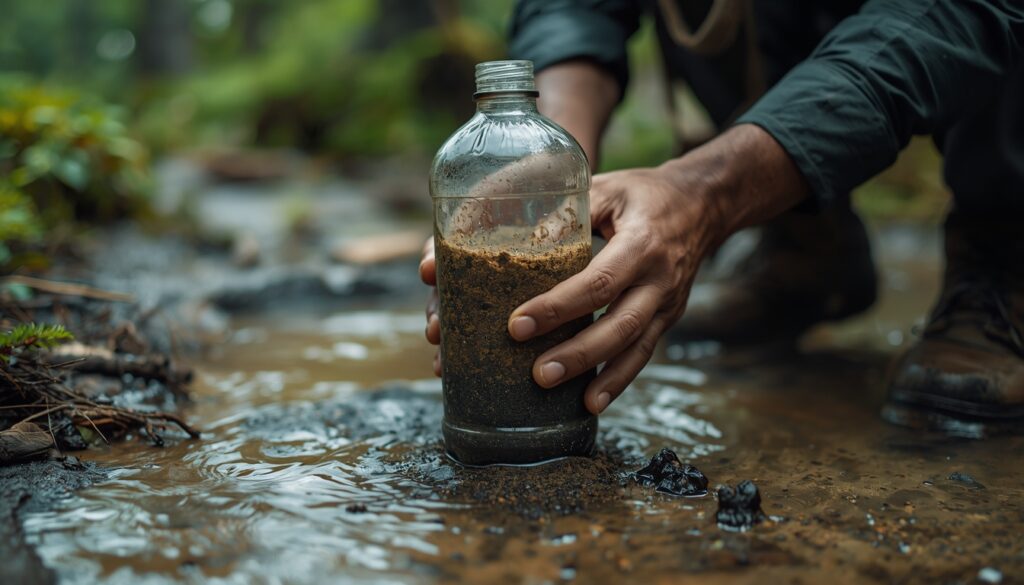
These sources are often contaminated and should never be consumed unfiltered.
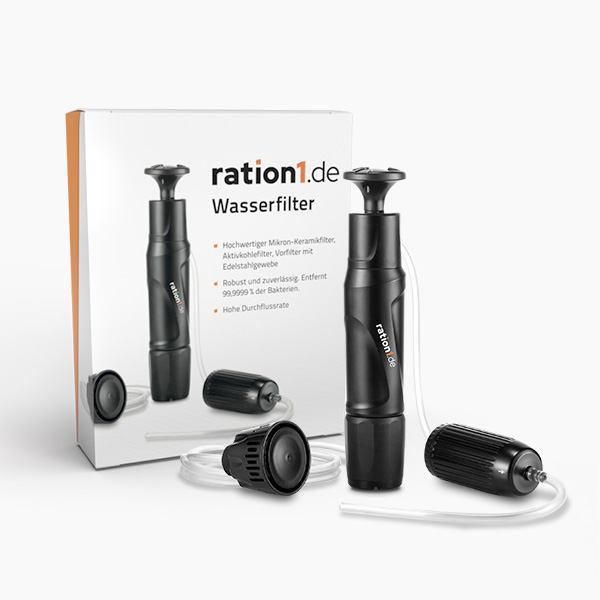
With a water filter you can make water from unsafe sources safe to drink.
Get prepared now and stay independent:
➡️ View the Best Water Filters for Emergencies
STORING WATER
Alongside purification, it’s important to store enough water.
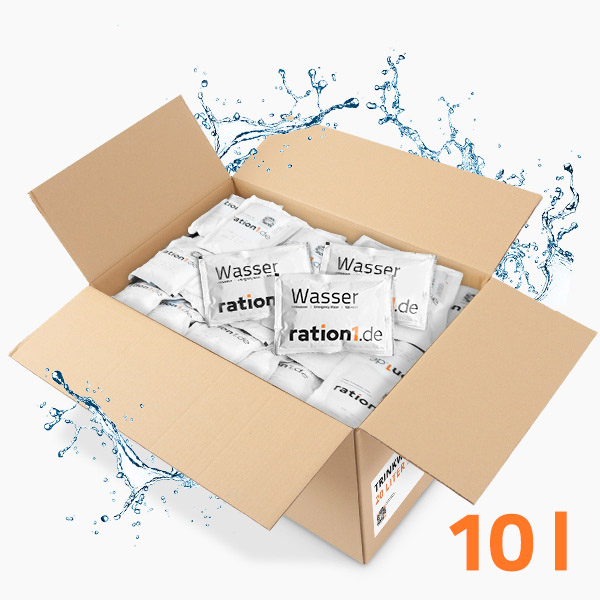
With jerrycans and suitable containers you can cover yourself for several days.
What Happens Without Preparation?
Without an adequate water supply, things can turn critical fast.
Problems:
- Dehydration
- Limited hygiene
- Health risks
Clean water is the most important resource in any emergency.
Common Mistakes in Water Preparedness
Typical mistakes:
- Storing too little water
- Having no filtration solution
- Relying solely on tap water
- Having no emergency plan
Good preparation can make all the difference when it counts.
Alternative Solutions
Alternative: Purify water yourself
Alongside storing, there’s a second important solution:
Filter water
With a water filter you can make water from rivers, lakes, or rainwater safe to drink.
This makes you independent of your stored supply.
Find the best water filters for emergencies here:
➡️ View Water Filter Comparison Now
Conclusion
A secure water supply during a blackout comes down to preparation.
Plan for at least 2–3 liters of water per person per day and build up a supply for at least 7 days.
Even better: supplement your supply with a water filter to stay flexible in any emergency.
Further important topics:
→ Water Filter Comparison
→ Emergency Equipment Checklist
→ Cooking Without Power